From reconstruction to long-term growth: a systemic framework for the economic transformation of Ukraine

Economy of the Future
A comprehensive plan for Ukraine’s economic recovery and growth, aimed at uniting the Government of Ukraine, international partners, and private investors around a shared long-term vision for the country’s economic transformation.
Read the documents

This is an investment and financial platform that captures concrete public and private commitments.

It defines
  • The required volume of financing
  • Sectors that can become drivers of future growth
  • Regulatory and policy changes needed to unlock investment
  • Mechanisms for the effective mobilization and deployment of public and private capital
The framework was developed

by the Government of Ukraine jointly with World Bank analysts, with the participation of business representatives and think tanks.

This strategy aims to achieve two key objectives: ensuring budget self-sufficiency and fostering the growth of Ukraine’s economy by attracting private capital into key sectors.
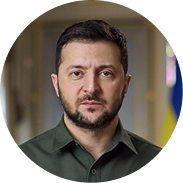
President of Ukraine Volodymyr Zelensky

Together with our international partners, we are working to develop an “Economy of the Future” strategy for Ukraine, based on analytical data from the World Bank. This strategy is built on EU rules — first and foremost, building a competitive and investment-attractive economy with strong institutions and a dynamically developing private sector. This includes the development of defense technologies, energy, the agricultural sector, transport, machine building, IT, and critical minerals.
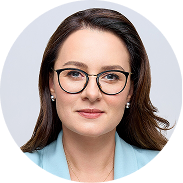
Yuliia Svyrydenko, Prime Minister of Ukraine

The economy of postwar Ukraine must be the most liberal, open, and competitive in the European Union. Our task is not merely to rebuild, but to carry out the most far-reaching economic transformation on the continent in recent decades.

I am convinced that Ukraine’s new economy must rest on three strategic pillars.

The first is the eradication of corruption and a level playing field — the essential conditions for attracting investment.

The second is the creation of a powerful industrial core that will ensure both our defense capability and the country’s recovery.

The third is building an innovative economy integrated into global markets.

Kyrylo Budanov, Head of the Office of the
President of Ukraine 

The “Economy of the Future” strategy is a systemic framework for building Ukraine’s new economy. It lays the foundation for long-term growth, the attraction of private capital, and the scaling of investment. The proposed approach combines reforms, the development of key sectors, and the creation of a predictable environment for business.

Antonella Bassani, World Bank Vice President
for Europe and Central Asia
Goals
Ukraine is building an advanced economy fully integrated into the European Union and aligned with EU standards, while simultaneously becoming one of the most liberal, open, and investment-friendly economies in Europe.
The goal is not merely to rebuild what was destroyed, but to build an economy that is more productive, more innovative, more competitive, and more attractive for investment than the one that existed before the war.
1
Encourages investment, innovation, and entrepreneurship
2
An innovative, high-value-added economy
3
Strengthens Ukraine’s role in European and global value chains
4
Creates quality jobs and raises living standards
5
Focus on private capital and private sector growth
6
Priority: industrial development and manufacturing
7
High productivity
UEF ambition: real GDP growth of ~6% per year
Three economic
growth scenarios for Ukraine

Average annual GDP per capita growth rate,
%, 2026–2040

Source: World Bank Group, Ukraine Economic Framework (UEF), Phase II, 2026

2.5%
Baseline

—No additional reforms
— Pre-war trend
—GDP: 12.5% of EU average (2024)

30 years to Poland's 2004 level
4.3%
Moderate

— Investment ~19% of GDP
— Return of 1.9 million refugees
— Productivity (TFP) growth to 3.3%

Convergence with the EU — over 20 years
6.0%
High

— Investment ~30% of GDP
— Return of 3.1 million refugees
— Productivity (TFP) growth to 5.0%
— Convergence with the EU in 15 years

Convergence with the EU — 15 years
Key Principles
  • The private sector is the foundation of the economy of the future
  • A maximally liberal economy, oriented toward business growth, with due regard for the security context
  • Integration of the economy into European and global value chains, with a high degree of localization in Ukraine
  • A new post-war social contract between the state and its citizens, ensuring social justice

A package of analytical and strategic documents

The Economy of the Future is not a single document but an integrated system of interconnected analytical and strategic documents. Each addresses a distinct dimension of Ukraine's economic development: from macro-fiscal modelling and labour-market dynamics to sectoral strategies, private capital mobilization, deshadowing, and innovation. Built on a shared evidence base and aligned with one another in logic and objectives, these documents together form a single concept of long-term growth — a vision of the future model of Ukraine's economy.
  • Ukraine Economy of the Future (UEF) Overview Presentation
    The overarching presentation that synthesizes all workstreams into a single concept and sets the frame for the remaining documents.
    Open Document
  • Lessons from Poland for Ukraine
    Lessons from Poland's experience of reform and convergence, applied to Ukraine.
    Open Document
  • Growth-Fiscal Scenario Modelling
    Modelling of growth and fiscal-policy scenarios.
    Open Document
  • Labour Supply Dynamics
    The dynamics of labour supply.
    Open Document
  • Sectoral Strategy
    Alleviating sector-specific growth constraints for faster growth convergence — removing sector-specific constraints to growth in order to accelerate convergence.
    Open Document
  • Private Capital Mobilization
    Meeting Ukraine's Investment Needs for Reconstruction and Growth — mobilizing private capital to meet the investment needs of reconstruction and growth.
    Open Document
  • Deshadowing the Economy
    Bringing the economy out of the shadows.
    Open Document
  • Innovation
    Strengthening Ukraine's innovation ecosystem to accelerate innovation-driven productivity growth — strengthening the innovation ecosystem to accelerate innovation-driven productivity growth.
    Open Document

Forthcoming dimensions (under development)

The list of documents will be expanded in stages. Among the workstreams being prepared for inclusion: the regional, energy, transport, and housing dimensions, as well as further dimensions of economic development.
Economy of the Future quantifies the resources required for Ukraine’s recovery and long-term growth
The goal is to provide a comprehensive picture of Ukraine’s total needs and a solid foundation for long-term financial commitments by international partners and investors.
$588 billion
reconstruction needs per the RDNA5 estimate over 10 years, on a “build back better” basis.
+$180 billion
investment in production modernization and productivity growth over 10 years.

The investment rate must rise from 16% to 24% of GDP from pre-war levels to a sustainable steady state

Private capital is expected to provide 75–80% of all investment, with the state contributing approximately 22%

9 priority sectors have been identified

Economy of the Future identifies the sectors with the greatest potential to become drivers of Ukraine’s future economy.
Selection criteria include: growth potential, export potential, productivity gains, capacity to attract investment, contribution to employment, and fiscal sustainability.
For each sector, investment opportunities, expected economic impact, and contribution to long-term growth are assessed.
  • 1
    Agri-food / Agribusiness
  • 2
    Defense Technology / Defense
  • 3
    Renewable Energy
  • 4
    Critical Raw Materials
  • 5
    Electronic Components
  • 6
    IT and Digital Services
  • 7
    Heavy Engineering
  • 8
    Transport Infrastructure
  • 9
    Construction Materials

Regulatory Reforms to Unlock Investment

For each priority sector, the framework identifies.
Regulatory barriers
what is constraining investment in the sector.
Regulatory and policy changes
required to unlock growth.
Measures to enhance competitiveness
and increase productivity.
Investment climate improvements
for a stronger business environment.
The goal is a practical roadmap directly linked to investment opportunities and economic outcomes. By defining regulatory changes for each sector, the framework offers a clear pathway for converting investment interest into concrete investment decisions.

The Economy of the Future framework includes

Flagship investment projects demonstrating the capacity to effectively absorb and deploy capital
Labor force and human capital projections to support growth and labor market demand.
Mapping of existing commitments by governments, international financial institutions, and private investors.
Identification of residual financing gaps requiring additional support.
Potential financial instruments

sovereign international support, development finance, blended finance mechanisms, guarantees and risk-sharing instruments, private investment vehicles.